NurseShield HealthTech MVP
The Vision
Reducing cognitive overload in environments where time is a luxury that nurses cannot afford.
The goal was to focus on mental recovery rather than simple efficiency. Instead of fighting strict industry regulations that make reducing charting times nearly impossible, NurseShield aimed to provide nurse managers with transparency into the real-time cognitive and stress overload of their staff.
The Challenge
Nurses input 600-800 data points per shift. 79% report extreme fatigue from cognitive overload. Reducing charting time is near impossible due to strict industry regulations.
The Process
Conducted deep user problem validation spanning Jan 2026 - Mar 2026. Pinpointed cognitive overload, staffing instability, and high-frequency ED checklists as the core root causes. Mapped the entire emergency department user journey.
The Impact
Pivoted towards management tools, building an MVP tailored to provide charge nurses and managers transparency into the real-time cognitive and stress overload of their staff.
Portfolio Gallery: The Prototype
Click to explore the visual design and core interactions of the NurseShield platform.
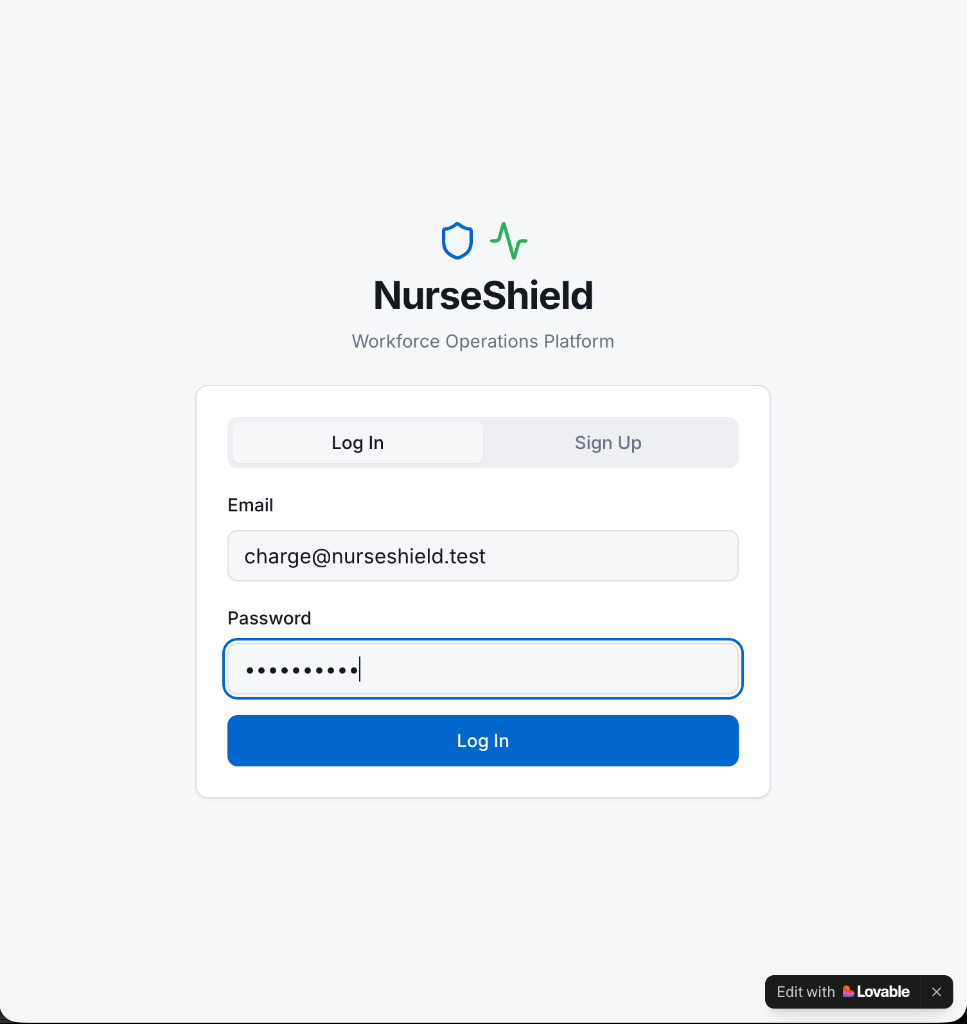
The Entry Point
Showcases the clean, professional 'NurseShield' login. It establishes the brand as a 'Workforce Operations Platform.'
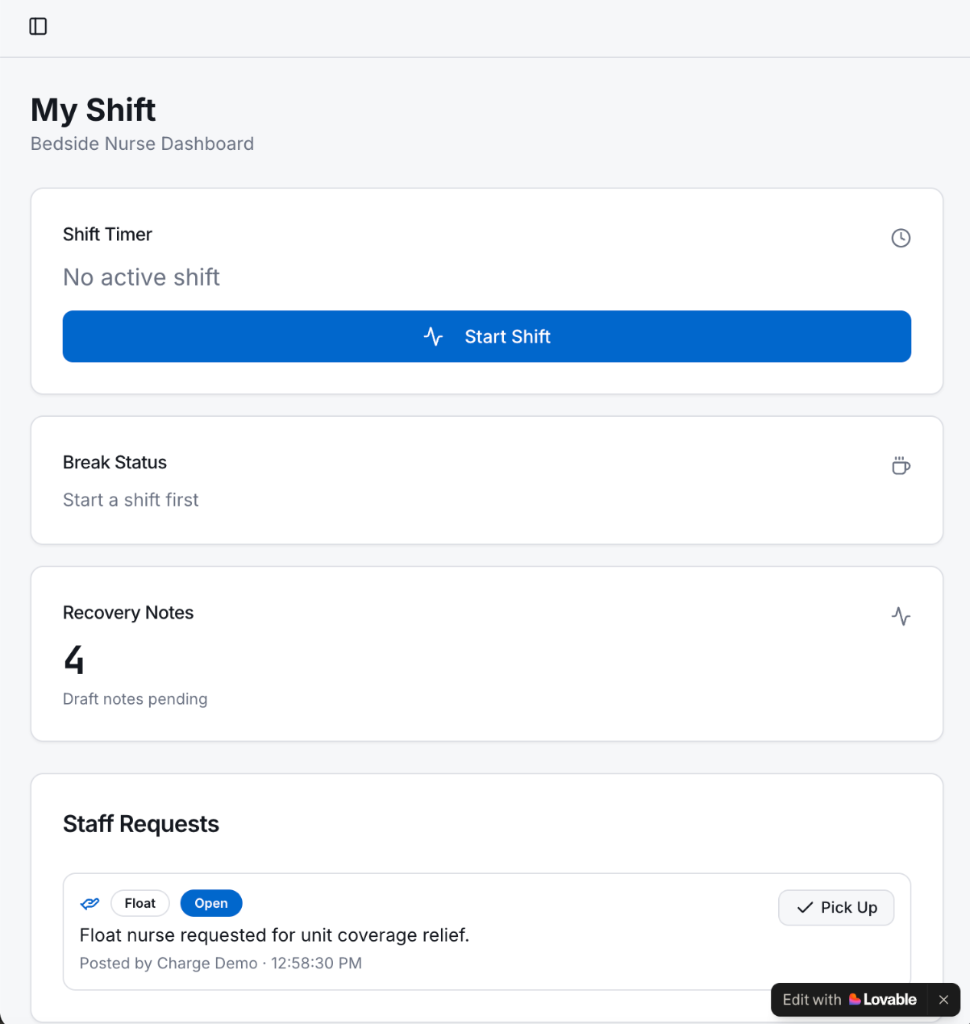
The Nurse's Reality
The Bedside Nurse Dashboard. Highlights the 'Shift Timer' and 'Staff Requests' features that were central to the initial hypothesis.
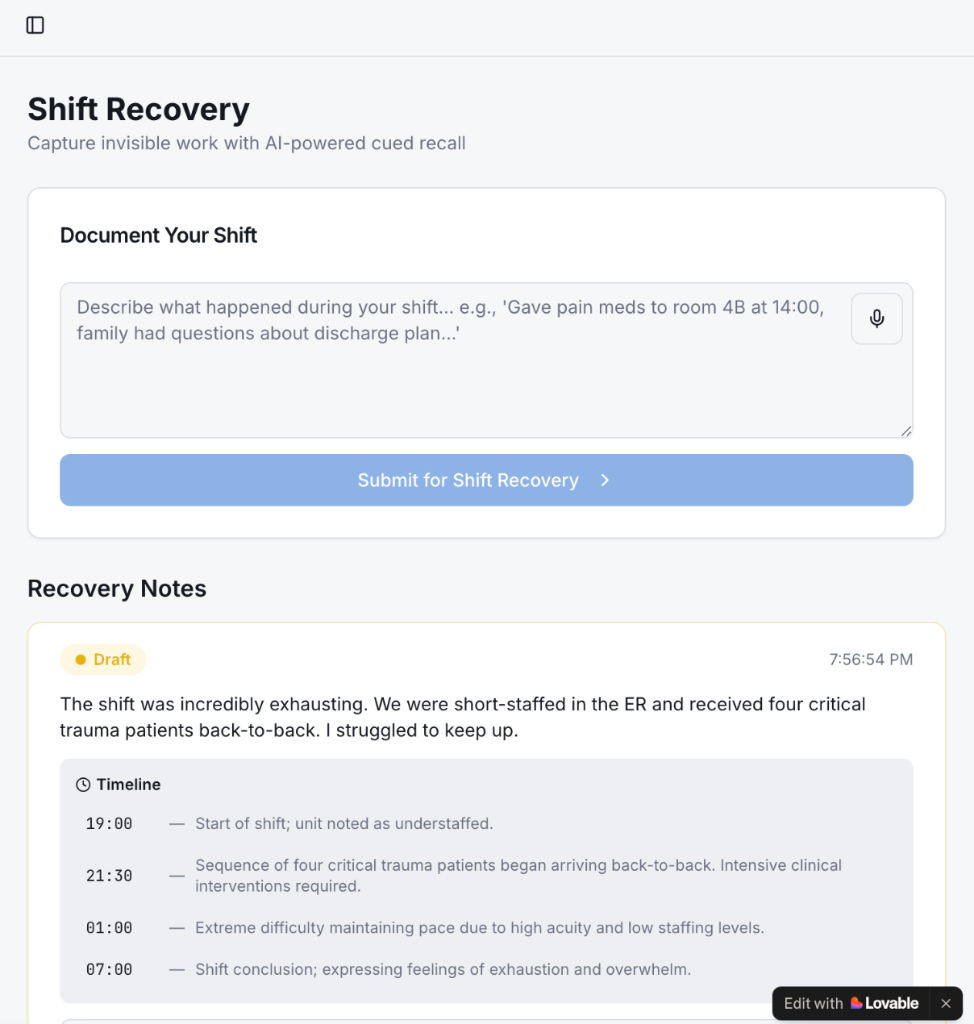
The AI Wedge
The 'Shift Recovery' screen. Shows how the app attempted to turn a stream of consciousness into a structured timeline.
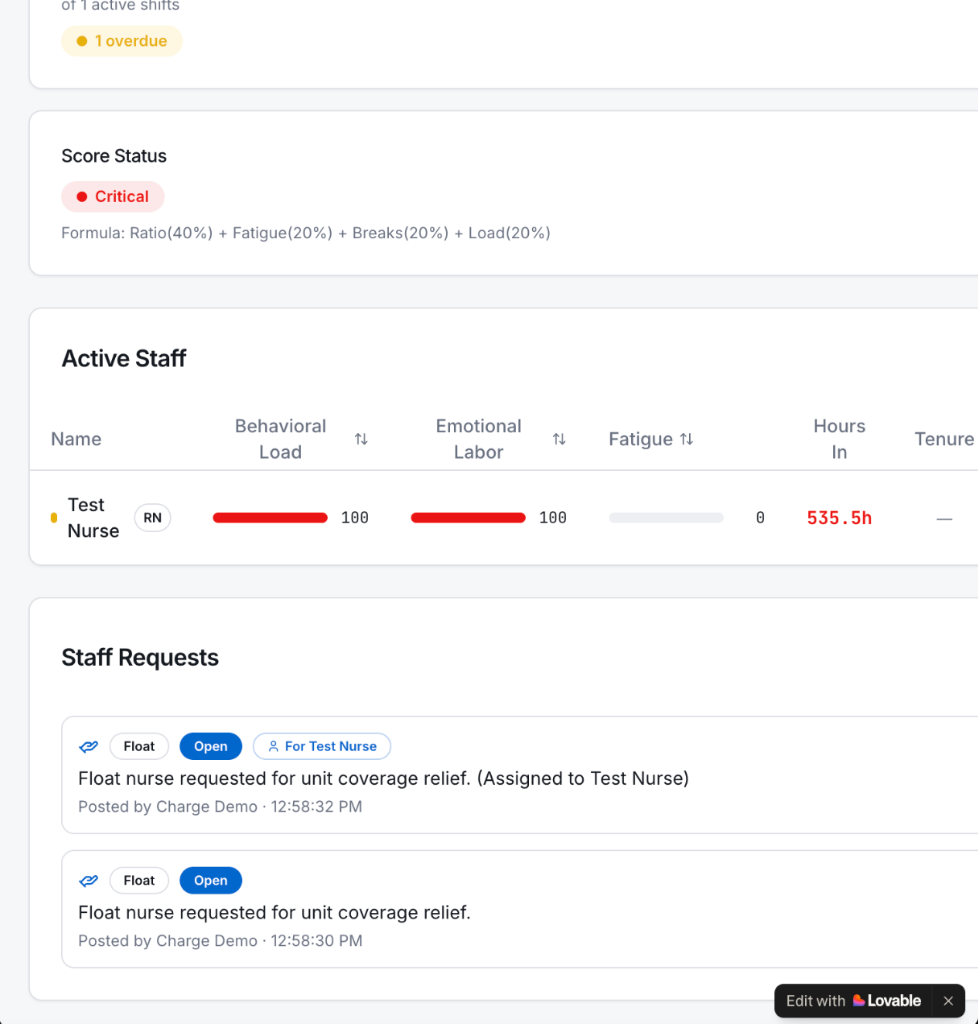
The Manager's View
The Charge Nurse Dashboard. This displays the 'Behavioral Load' and 'Emotional Labor' metrics, a bold attempt to quantify nurse well-being.
The 'Aha' Moment
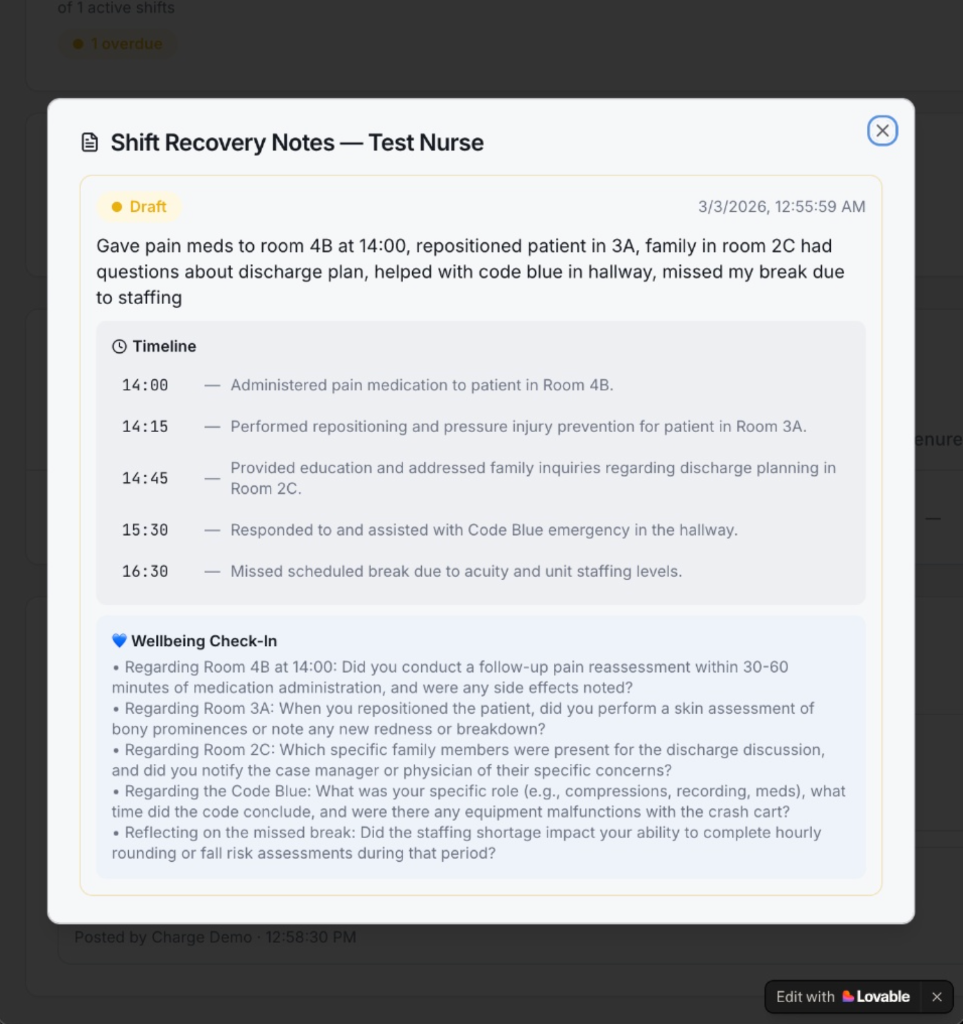
The Shift Recovery Notes modal. This is where the 'too many questions' feedback originated, marking the turning point of the project.
Feature Demo
A visual walkthrough of the AI-powered shift recovery and workforce coordination features.
Project Post-Mortem
Why "perfect" software doesn't always solve a systemic crisis.
The Narrative Path
Problem Hunting
Narrowed focus to healthcare after realizing the physical and mental toll on frontline nurses. Validated the 'Invisible Work' gap.
Clinical Deep-Dive
Interviews with ED nurses confirmed that 20.7% of critical documentation occurs outside scheduled hours.
MVP Build
Built a functional AI-powered prototype to turn stream-of-consciousness inputs into structured logs.
The Hard Stop
Chose to drop the standalone model after realizing the product faced a Micromanagement Paradox.
The Decision to Pivot
Not every crisis has a software solution.
The project was halted not due to technical failure, but due to a deeper understanding of the healthcare ecosystem.
The Micromanagement Paradox
While the tool protected nurses by documenting their "invisible work," users feared it would become a surveillance tool for management. In an environment where trust is already fractured, adding a tracking layer felt like the "wrong time."
Software vs. Systemic Crisis
Systemic issues like understaffing and shift gaps are structural failures that cannot be "fixed" by an emotional offloading application. The primary solution to burnout is more nurses, not better code. Nurses were skeptical that any standalone software could solve the root resource problem.
"Some problems are systemic crises that software can only bandage. This solution belongs as a native, invisible feature within EHRs like Epic or Meditech, rather than a separate platform."
Product Outcome & Strategic Potential
Critical Pain
79% of nurses report chronic stress overload due to undocumented labor.
AI Potential
Reclaiming 2-3 administrative hours daily via ambient recovery tools.
Strategic Oversight
Empowering managers to identify burnout patterns and reduce turnover before it occurs.
Final Verdict
Pivot to Feature. Valid technology, wrong delivery model for a standalone app.